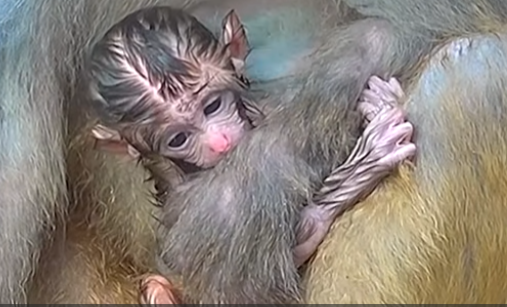
The statement that a baby elephant was torn to pieces by its mother and that a mother monkey threw her baby into a puddle is deeply upsetting and naturally triggers strong emotional reactions. Scenes like these shock us because they conflict with what we expect from maternal instincts, which are usually associated with protection, care, and unconditional nurturing. However, understanding such events requires context, restraint in language, and a careful look at animal behavior rather than immediate judgment.
In the animal world, mothers rarely harm their young under normal conditions. When such tragic incidents occur, they are almost always signs of extreme stress, confusion, illness, or environmental disruption. Animals do not act with cruelty in the human sense. Their behaviors are driven by instinct, survival pressures, and physical or psychological states that we may not easily see.
Elephants, for example, are among the most emotionally complex animals on Earth. Mother elephants typically form strong bonds with their calves and rely heavily on herd support. When a mother harms a calf, it is often linked to severe distress, injury, hormonal imbalance, loss of herd structure, or trauma caused by captivity, overcrowding, or human interference. The tragedy reflects not a lack of love, but a breakdown in conditions needed for normal behavior.
Similarly, monkeys are highly social animals whose parenting behavior can be affected by fear, competition, inexperience, or stress. In rare situations, a mother monkey may act erratically if she feels threatened, overwhelmed, or unable to cope. What looks like indifference or rejection may actually be panic or confusion rather than intent to harm.
Language also matters. Graphic or sensational descriptions can intensify pain without adding understanding. When stories are framed only in shocking terms, they distract from the real issue—animal welfare and the environments we force animals to live in. Habitat loss, captivity, noise, human crowding, and lack of proper social support all increase abnormal behavior in animals.
These tragic moments should not be used to provoke outrage alone. They should encourage reflection and responsibility. What role did the environment play? Were these animals under unnatural pressure? Could better protection, space, or care have prevented the outcome?
The true heartbreak lies not just in the loss of young lives, but in the systems that fail animals again and again. Wild animals need stable environments and social structures to thrive. When those are disrupted, the consequences can be devastating.
Rather than condemning animal mothers, we should focus on compassion, education, and stronger efforts to protect wildlife. Understanding prevents repetition. Empathy leads to change.