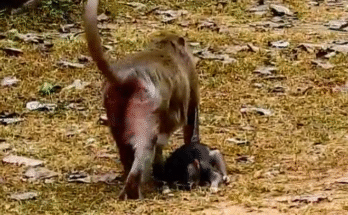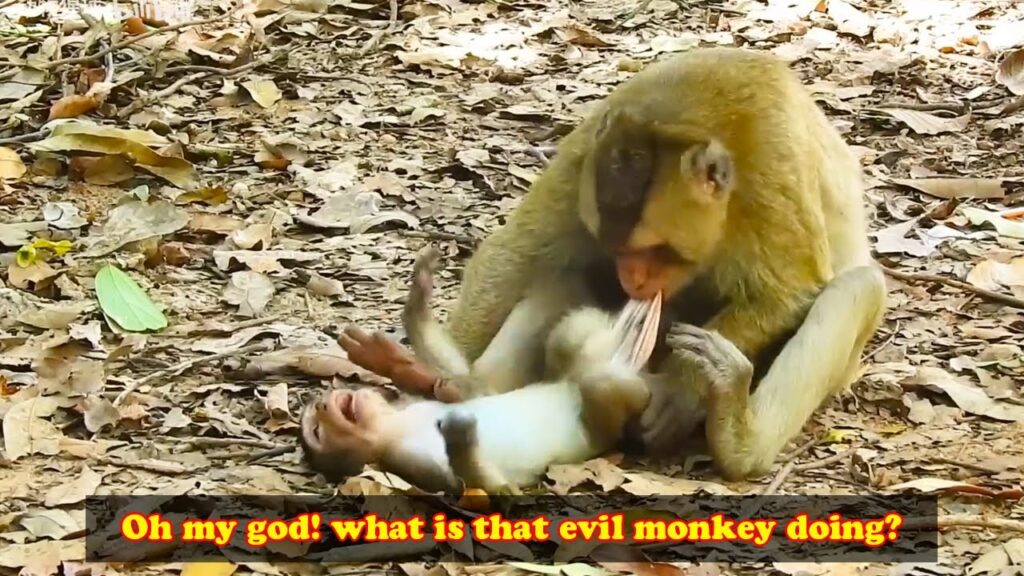
Oh… my God. The scene was shocking and deeply disturbing, leaving everyone frozen in disbelief. A mother monkey, behaving in a way no one had ever seen before, suddenly turned aggressive toward her own child. What made it even more frightening was that her behavior appeared abnormal, as if driven by a severe illness affecting her mind and instincts.
The mother had not always been like this. She was once attentive, protective, and calm. But something had changed. Her movements became erratic, her eyes restless, and her reactions unpredictable. Instead of responding to her baby’s cries with comfort, she reacted with confusion and rage. When the baby reached out to her, trusting and unaware of the danger, the mother lashed out viciously, biting and attacking in a way that shocked everyone nearby.
The baby screamed in pain and fear, unable to understand why the one who was supposed to protect him had become his greatest threat. His small body tried to escape, but he was weak and slow compared to her sudden aggression. The cries echoed through the area, sharp and desperate, but help did not come immediately. Others nearby hesitated, sensing that something was terribly wrong.
This kind of behavior is not natural under normal conditions. Severe illness, neurological damage, or extreme stress can cause animals to lose control of their instincts. While people might describe such behavior using frightening terms, what truly happened was a tragic breakdown of a mother’s natural ability to recognize and protect her child. Her illness had overtaken her mind, replacing care with chaos.
Eventually, others intervened, driving the mother away before the situation became even more fatal. The baby was left trembling, injured, and terrified. His body showed wounds, but the emotional damage was just as deep. Being attacked by one’s own mother shatters the most basic sense of safety. The baby curled into himself, shaking, unsure of where to turn next.
The mother, meanwhile, continued to behave erratically, pacing and acting aggressively toward anything that moved. Her condition made her dangerous not only to her child but to others as well. It was clear that she was suffering from something serious, something that robbed her of control and awareness.
This heartbreaking incident reminds us how cruel illness can be—not just to the one afflicted, but to those around them. The baby did nothing wrong. The mother did not choose to become this way. Both were victims of circumstances beyond their control.
It was a moment filled with fear, confusion, and sorrow. Watching a bond meant to represent safety turn into violence was devastating. In the end, the scene left a lasting impression: when illness overtakes instinct, even the strongest bonds can tragically break.