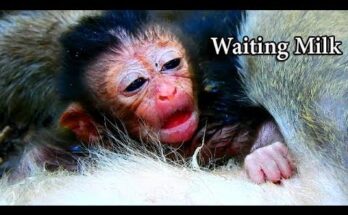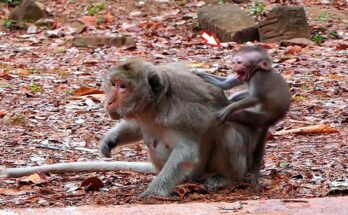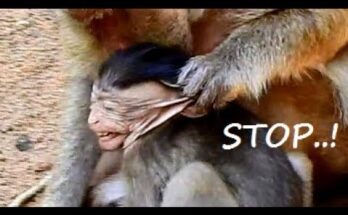
r Seen Before Behavior” sounds shocking, but sometimes what seems cruel in nature has deep, complex reasons behind it. When a mother monkey harms or rejects her infant, it is not simply brutality—it is a tragic reflection of stress, instinct, environment, and survival pressures that shape life in the wild.
Mother monkeys are normally incredibly protective. They nurse, groom, and carry their babies close, forming one of the strongest maternal bonds in the animal world. So when this bond breaks, it raises heartbreaking questions. One of the darkest but most common reasons is stress and exhaustion. A mother living in a troop with scarce food, constant threats from predators, or intense competition may become overwhelmed. When her physical condition weakens, her ability to care for her infant weakens too. Sometimes, her instinct shifts toward survival rather than nurturing, leading to neglect or even aggression.
Another reason is illness or deformity in the infant. If a baby is born weak, injured, or unable to survive long-term, a mother may instinctively reject it. In human eyes, this is tragic and cruel, but in nature, it is a harsh form of natural selection. The mother may unconsciously conserve energy for future offspring or for her own survival.
Social pressure within the troop can also play a role. Dominant members may bully or threaten a mother. If she is low-ranking, constantly chased, or attacked, the stress can alter her behavior dramatically. In rare cases, troop dynamics can even trigger confused, fearful reactions toward her own baby.
There are also psychological reasons. Just like humans, animals can experience trauma. A mother who has previously lost infants, faced violence, or suffered hunger may become emotionally unstable. What appears to be “monstrous behavior” may actually be trauma expressed in the only way her instinct understands.
Scientists studying primates emphasize that such behavior is still rare. Most monkey mothers are tender, protective, and deeply bonded to their infants. When harm does occur, it is not an act of cruelty—it is a heartbreaking failure of environment, health, and survival pressure.
Watching such moments can break the heart. It reminds us that the wild is not always filled with beauty and peace. It is also full of struggle, fear, and impossible choices driven not by malice, but instinct. Instead of seeing only the “darkness,” we should see the sadness, the complexity, and the fragile reality of life in nature.