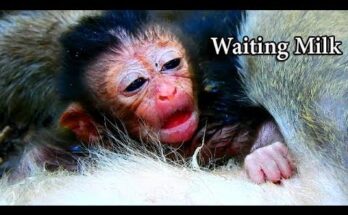
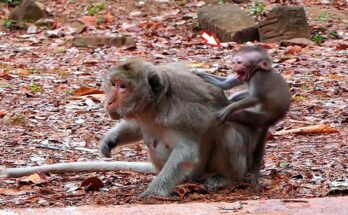
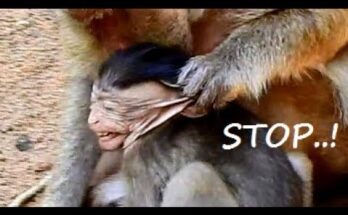
Sometimes in the animal world, even something as natural as a mother caring for her newborn does not go the way it should. When a baby monkey is rejected by its mother, it can be heartbreaking to watch. The tiny baby, confused and desperate, cries softly, clings to branches, and tries to stay close, not understanding why the warmth and comfort it depends on are suddenly gone. A mother is normally a baby monkey’s whole world—she provides milk, protection, love, and guidance. So when she refuses to nurse, it feels like the baby has lost everything.
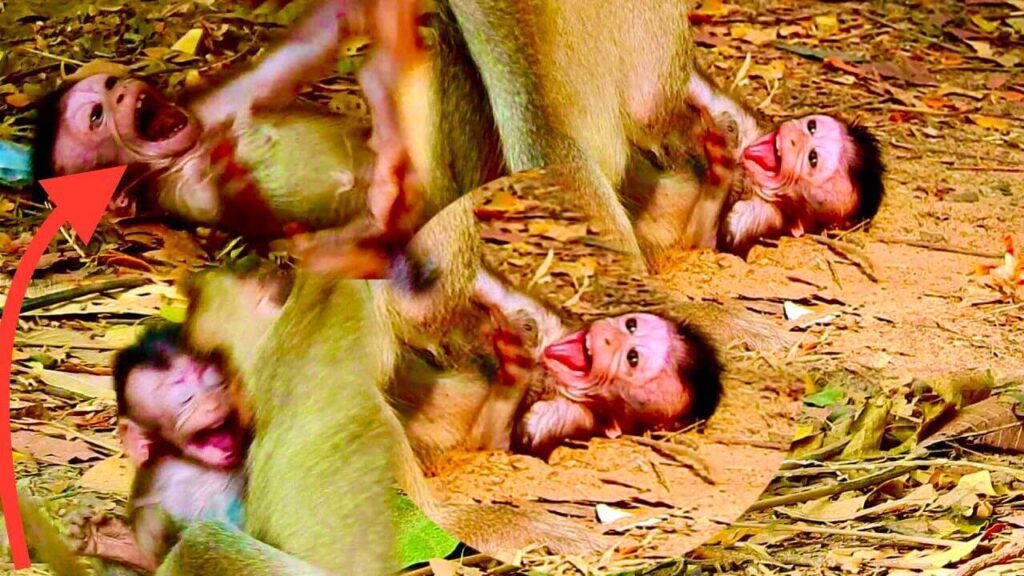
There are many reasons this sad situation can happen. Sometimes the mother is too young or inexperienced and does not understand how to care for her baby. Other times, she may be weak, stressed, hungry, or ill, and simply does not have the strength or milk to give. In the wild, stress can come from danger, lack of food, or disturbances caused by humans. Occasionally, a baby is born weak or sick, and the mother senses it may not survive, so she instinctively focuses on her own survival or the rest of the troop. Though it seems cruel, it is nature’s harsh reality.
For the baby monkey, this rejection is deeply painful. Without milk, it becomes weaker, its small body trembling as it tries again and again to get close to its mother. It does not understand why she pushes it away or ignores it. Its eyes look sad, its little hands reach out, and its cries echo with loneliness. The baby does not just miss food—it misses warmth, heartbeat, comfort, and safety.
Sometimes, if the baby is lucky, another female in the troop may help, offering some care or even allowing the baby to stay close. In rescue centers or sanctuaries, humans may step in with gentle care, warmth, and milk to give the baby a chance to live. But even then, the emotional wound remains, because the bond between a mother and baby cannot be perfectly replaced.
Watching a rejected baby monkey reminds us how fragile life is, and how deeply animals feel, even if they cannot speak. The sadness in that tiny face is real. It teaches compassion, responsibility, and respect for wildlife. Every life matters, and every small creature deserves love, care, and safety.