Big danger erupted suddenly when Amy realized that her food was gone. Just moments earlier, she had carefully gathered it, planning to eat and regain her strength. In the wild, food is not just a comfort—it is survival. When Amy saw Joice clutching the stolen food and trying to escape, her reaction was immediate and fierce. Hunger, instinct, and anger combined into a powerful force that could not be ignored.
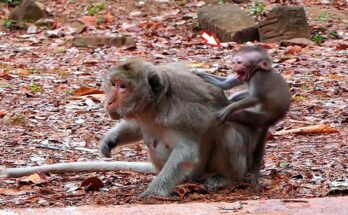
Joice knew she had made a risky choice. Desperation had driven her to steal, but once Amy noticed, fear took over. Joice ran as fast as she could, darting through trees and over uneven ground, her heart pounding with every step. Behind her, Amy gave chase, her movements sharp and determined. This was not just about food anymore—it was about boundaries and survival.
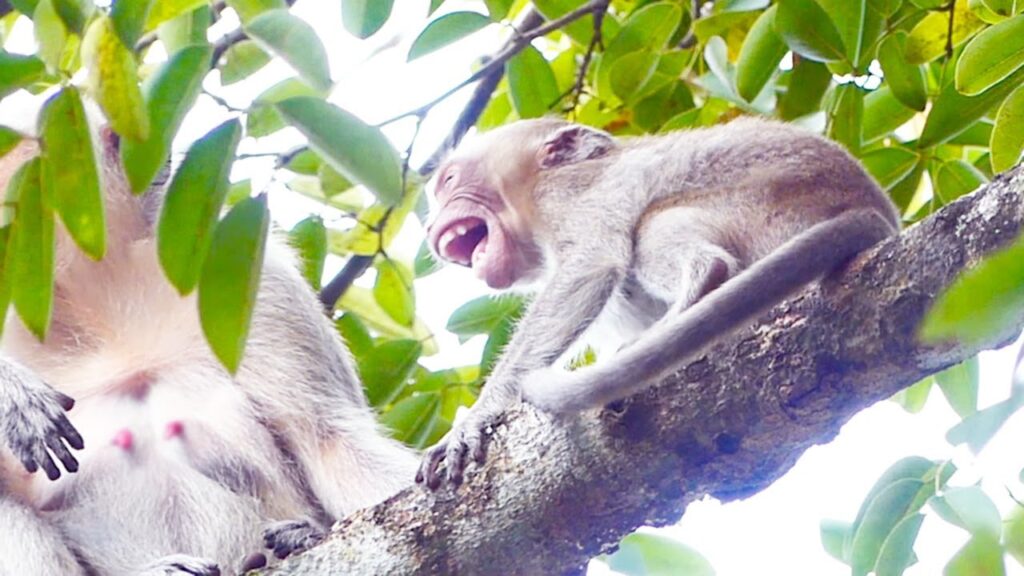
The chase was intense. Branches shook, leaves scattered, and the forest filled with the sound of rapid movement. Amy closed the distance quickly, fueled by rage and hunger. Her eyes were fixed on Joice, her body moving with practiced strength. Joice glanced back in panic, nearly losing her balance as she ran. One wrong step could mean serious injury.
Others nearby watched the chase unfold, sensing the danger but staying out of the way. Intervening in such conflicts can be risky. Food disputes are among the most dangerous, because hunger pushes individuals beyond normal caution. Amy was not chasing for dominance alone—she needed that food to survive. Joice, on the other hand, was running not out of greed, but out of desperation.
As the chase continued, Joice began to slow. Fatigue set in, and fear drained her strength. Amy, though also tired, remained relentless. Finally, Amy lunged forward, forcing Joice to drop the stolen food. The moment the food hit the ground, the chase stopped. Joice scrambled away, shaken and frightened, choosing safety over possession.
Amy reclaimed her food, breathing heavily, her body still tense with adrenaline. She did not pursue Joice further. The message had been delivered. In the wild, such confrontations are often brief but intense, serving as lessons about limits and consequences. Amy’s reaction was harsh, but driven by instinct and necessity rather than cruelty.
Joice retreated to a distance, her body trembling as the reality of what almost happened settled in. She had escaped, but the danger she faced would not be forgotten. Hunger may push individuals to take risks, but the cost can be high.
This incident highlights the harsh balance of survival. When resources are scarce, conflict becomes inevitable. Amy’s chase was a reminder that in nature, food equals life, and protecting it can mean the difference between strength and weakness. For Joice, the experience was a painful lesson in risk and consequence. For both, it was another moment shaped by the unforgiving rules of the wild.