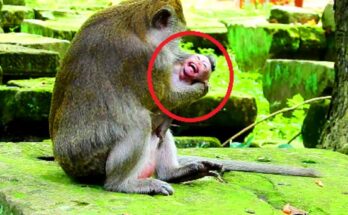
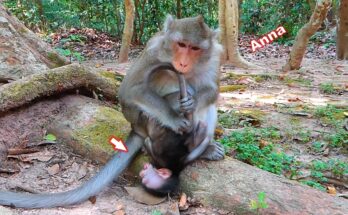
It is frightening to imagine monkeys biting one another and tearing flesh, especially because we often associate monkeys with playful, intelligent, and social behavior. Scenes like this shock people because they challenge our expectations and stir deep discomfort. However, to understand why such behavior can occur, it is important to look at monkey behavior through a biological and environmental lens rather than pure emotion.
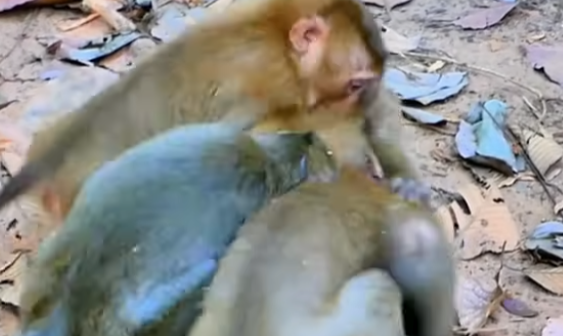
Monkeys, like many wild animals, live within complex social hierarchies. Their groups are governed by dominance, competition, and survival instincts. While cooperation and grooming are common, aggression can also be a natural part of their social structure. Fighting may occur over territory, food, mating rights, or rank within the group. In extreme cases, conflicts can escalate into violent encounters that may result in serious injury or death.
Cannibalistic or flesh-eating behavior among monkeys is rare, but it has been documented in certain species under extreme conditions. These situations are often linked to intense stress, starvation, overcrowding, or habitat disruption. When normal food sources disappear or social structures collapse, animals may behave in ways that seem shocking to humans but are driven by survival instinct rather than cruelty.
Human influence plays a significant role in increasing such disturbing behavior. Deforestation, illegal wildlife trade, captivity, and forced proximity to humans can severely disrupt monkey communities. Crowded environments, lack of stimulation, and competition for limited resources can heighten aggression. In captive or tourist-heavy areas, monkeys may lose natural behaviors and develop abnormal patterns, including violent attacks on one another.
It is also important to avoid sensationalizing these incidents. Graphic descriptions can create fear and misunderstanding, painting animals as monsters rather than living beings responding to their circumstances. Monkeys do not act with moral intent. They do not understand right or wrong as humans do. Their actions are shaped by instinct, environment, and survival pressures.
These frightening moments should serve as warnings, not entertainment. They highlight the importance of protecting wildlife habitats and treating animals ethically. When monkeys live in stable environments with enough space, food, and social balance, extreme violence becomes far less common.
Ultimately, the fear we feel when witnessing such behavior reflects our own values of empathy and protection. Instead of turning away in horror or spreading shock-driven narratives, we should ask deeper questions about why these situations occur and what can be done to prevent them. Conservation, education, and responsible human behavior are essential to reducing the conditions that lead to such terrifying outcomes.