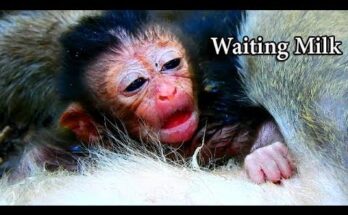
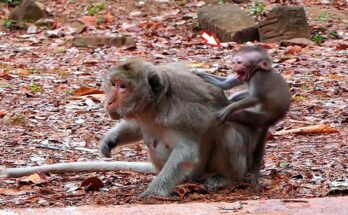
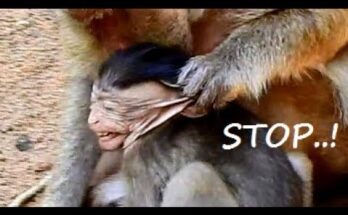
Oh my God—at first glance, the scene looked terrifying. An old monkey appeared to be holding a tiny infant close to its mouth, and to those watching, it raised a frightening question: was this monkey eating its own baby? The shock of such a thought can be overwhelming, because it goes against everything we expect from parental behavior. But situations like this are often more complex than they appear.
In the wild, unusual behaviors can easily be misunderstood, especially when fear and emotion take over. What looks like an act of violence may actually be something very different. Old monkeys, especially those weakened by age, illness, or confusion, may behave in ways that seem alarming. Sometimes they mouth or hold infants tightly, not out of aggression, but due to stress, disorientation, or a breakdown in normal instincts.
Age can affect a monkey’s senses and decision-making. Poor eyesight, neurological decline, or extreme hunger can cause abnormal actions. In rare cases, severe stress or illness can disrupt natural maternal or social behavior, leading to actions that appear frightening or inappropriate. This does not mean the monkey is intentionally trying to harm its baby in a cruel way. More often, it reflects confusion rather than malice.
There are also moments when observers misinterpret grooming or carrying behavior. Monkeys often use their mouths gently to carry, clean, or inspect infants. When panic spreads quickly, a brief moment can look far worse than it truly is. However, it is also true that in extreme conditions—such as starvation, overcrowding, or illness—some animals may lose normal boundaries, leading to tragic outcomes.
What makes the situation so scary is the vulnerability of the baby. A newborn has no way to escape or defend itself. Any abnormal behavior from an adult becomes dangerous instantly. Watching such a moment can leave a lasting emotional impact, especially when we project human expectations of care and protection onto animals.
This kind of scene reminds us that nature does not always follow the rules we hope for. Survival pressures, sickness, and aging can change behavior in disturbing ways. It is not a story of good versus evil, but of breakdown—of instinct failing under extreme conditions.
Rather than viewing it only as something monstrous, it helps to understand the deeper causes. Fear, illness, hunger, and confusion can push animals beyond their normal patterns. That does not make the outcome less sad, but it makes it more real.
In the end, the fear we feel comes from witnessing vulnerability meeting unpredictability. It is scary because it challenges our belief that parents always protect their young. Sadly, nature is not always gentle, and moments like this show just how fragile life can be when instinct, health, and environment collide.