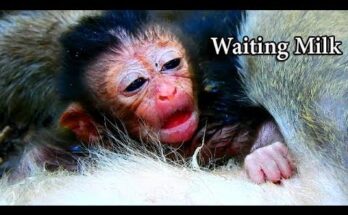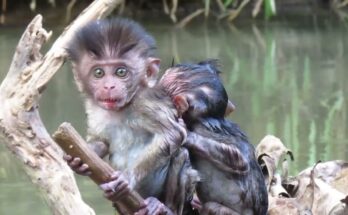
More than pity filled the air when the baby monkey Leo fell from the tree and died instantly. It was a moment that happened too fast for anyone to stop, too sudden for the heart to prepare. One second, Leo was clinging to the branches above, small hands gripping the bark as he tried to follow the world he was just beginning to understand. The next second, everything was over.
Leo was still very young, full of curiosity and trust. Like many baby monkeys, he followed instinct more than skill, copying movements without fully understanding the danger beneath him. The tree that had once felt like a place of safety and exploration became the setting of a tragic accident. A slip, a missed grip, or a weak branch was all it took. The fall was fatal, and Leo never had a chance to cry for help.
What made the loss even more heartbreaking was the silence that followed. There was no struggle, no recovery, only stillness. Life left Leo’s small body instantly, leaving behind shock and disbelief. Those nearby froze, unable to comprehend what had just happened. In nature, death often comes quietly, without warning or explanation.
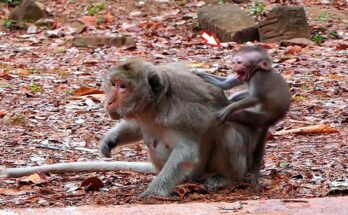
Leo’s mother returned moments later. She searched the tree, then the ground, her movements frantic and confused. When she found Leo, she touched him repeatedly, nudging and lifting him as if hoping he would wake up. She could not understand why he did not respond. Her behavior showed panic, denial, and pain all at once. A mother’s instinct does not accept loss easily, especially when it comes so suddenly.
She stayed close, refusing to leave him. Other monkeys watched from a distance, sensing the gravity of the moment. No one interfered. There are no rituals, no words, no comfort in the wild—only presence and instinct. The forest itself seemed quieter, as if acknowledging the loss of a young life that barely had time to begin.
This tragedy reminds us how fragile life is, especially for the young. Baby monkeys depend entirely on coordination that is still developing, on branches that may not hold, and on timing that must be perfect. One small mistake can end everything. Leo did not die because of neglect or cruelty. He died because nature can be unforgiving.
The phrase “more than pity” fits this moment because pity alone is not enough. There is sorrow, helplessness, and a deep sense of unfairness. Leo never had the chance to grow, to learn, to play, or to experience the world beyond his earliest days. His life ended before it could truly begin.
Leo’s death is a painful reminder that behind every moment of beauty in nature lies risk. It teaches humility and respect for the delicate balance of life. Though Leo is gone, his story remains—a quiet, heartbreaking lesson about innocence, danger, and the fragile line between living and losing everything in an instant.