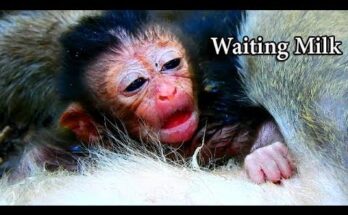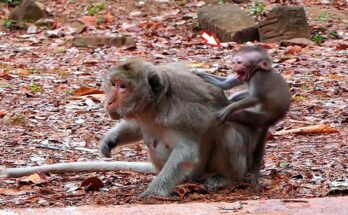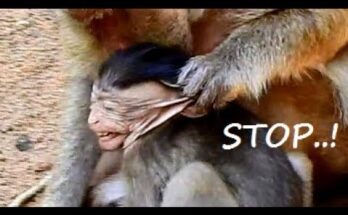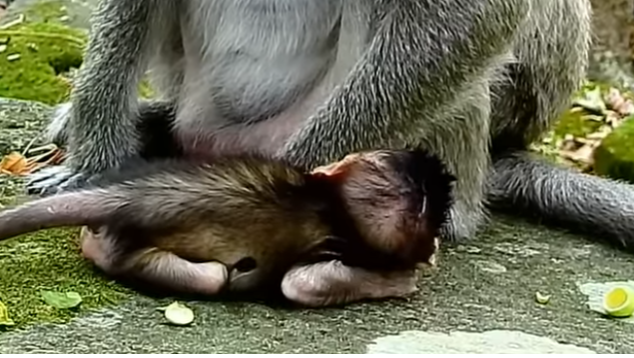
Oh God, it was a deeply troubling scene—a bad example that left everyone confused and upset. Dana’s sudden bad temper shocked those who witnessed it, especially when she struck baby Donny so hard. Donny was small, vulnerable, and clearly unprepared for such force. He cried out in fear, stumbling as he tried to move away, his body shaking with shock. Seeing a baby treated this way was heartbreaking and raised the painful question: why would Dana do this to Donny?
At first glance, it looked like cruelty. Dana’s movements were sharp and aggressive, her posture tense, her face rigid with agitation. Donny, on the other hand, showed no signs of defiance. He was curious, slow, and clumsy in the way babies often are. When he tried to get close—perhaps seeking comfort or protection—Dana reacted with anger instead of care. The contrast between her strength and his helplessness made the moment even harder to watch.
But behavior like this, while disturbing, often has complex roots. In the wild, stress can push adults to the edge. Scarcity of food, threats from rivals, illness, or hormonal imbalance can all affect behavior. Sometimes a caregiver perceives a baby as weak, distracting, or at risk of attracting danger. Other times, fear and frustration erupt without warning. These explanations do not excuse the harm, but they help us understand that such actions are often driven by instinct and pressure rather than conscious malice.
Donny’s reaction was especially painful to see. After being hit, he crouched low, trying to make himself smaller, eyes wide with confusion. He didn’t understand why the person he depended on had become a source of pain. He didn’t fight back; he simply endured. That quiet submission spoke volumes about his vulnerability and the emotional toll of the moment.
Other members nearby seemed unsettled. Some watched cautiously, others kept their distance, as if sensing that intervening might escalate the situation. The environment felt tense, the air thick with uncertainty. Moments like this remind us that the wild is not guided by fairness, but by survival—and that survival can sometimes produce harsh outcomes.
Still, it’s important to say this clearly: hitting a baby is a bad example. It teaches fear, not strength. Donny needed patience, guidance, and protection, not violence. Whether Dana’s behavior was fueled by stress or instinct, the impact on Donny was real and painful.
The hope, always, is that calm returns. That instincts soften. That care replaces anger. Because every young life deserves safety, and every moment of harm leaves a mark that takes time—and kindness—to heal.